16th Annual International Bhikkhuni Day
September 26, 2026, Full Moon
Celebrating the 2610th Anniversary of the Founding of the Bhikkhuni Sangha
Theme: INSPIRING Bhikkhuni Arahants
The full moon of September is recalled as the ordination day of Mahāpajāpatī Gotamī Therī & the Courageous 500 Founding Mothers of the Bhikkhuni Sangha, the first Buddhist bhikkhunis. The 1st Annual International Bhikkhunī Day (IBD) took place on September 17, 2011. Each year since then, we have paid respects to the Bhikkhuni Sangha and acknowledged its essential role in preserving the Dhamma.
We invite you to join this year’s International Bhikkhuni Day celebration! To organize an event in your community, click here for some tools you can use to create an informative and inspiring celebration. (You can also click here to visit our archive of all past IBDs.)
For this year’s International Bhikkhuni Day, we’re highlighting those ancient arahant bhikkhunis whose stories have inspired today’s bhikkhunis.
 Tathālokā Therī Tathālokā TherīDhammadharini Monastery, Northern California, USA Inspired by Bhaddā Kuṇḍalakesī As an young wandering seeker with a fiercely inquiring mind, Bhaddā Kuṇḍalakesī was my hero.
Read reflectionClose reflection+
Bhaddā Kuṇḍalakesī Therī was of great inspiration and encouragement to me as a young bhikkhunī because she was such a badass. We need heroes we can identify with. As an young wandering seeker with a fiercely inquiring mind, she was my hero. Even with enormous latent pāramīs, as a very young woman, Bhaddā got into all kinds of trouble, intoxicated by love and sex, leading to violence and great loss. She went forth with the nearest sāmana group known to accept women, the Jains, her hair torn out by the roots for her initiation in response to her asking for their highest course of renunciate asceticism. Doing all she was told without finding relief, when they couldn’t answer her further Dhamma questions, she left there, wandering in a single robe, wearing the dust. Everywhere she wandered, she set forth a challenge to debate. But when she met the Buddha at Vulture Peak, that all stopped. Hearing words of Dhamma in his presence, she immediately penetrated the meaning and awoke. She was seen, acknowledged, and welcomed by the Buddha: “‘Ehi, Bhadde’ti” (“Come, Bhaddā). That was it. There was no turning back. She was free. And for the rest of her life she wandered free from debt—a bhikkhunī arahantī—one of the foremost disciples of the Buddha. While these days, I don’t have a favorite arahant bhikkhunī anymore—I appreciate them all!—I offer this in deep gratitude and compassion to my younger self, blessing those who helped her find the courage.
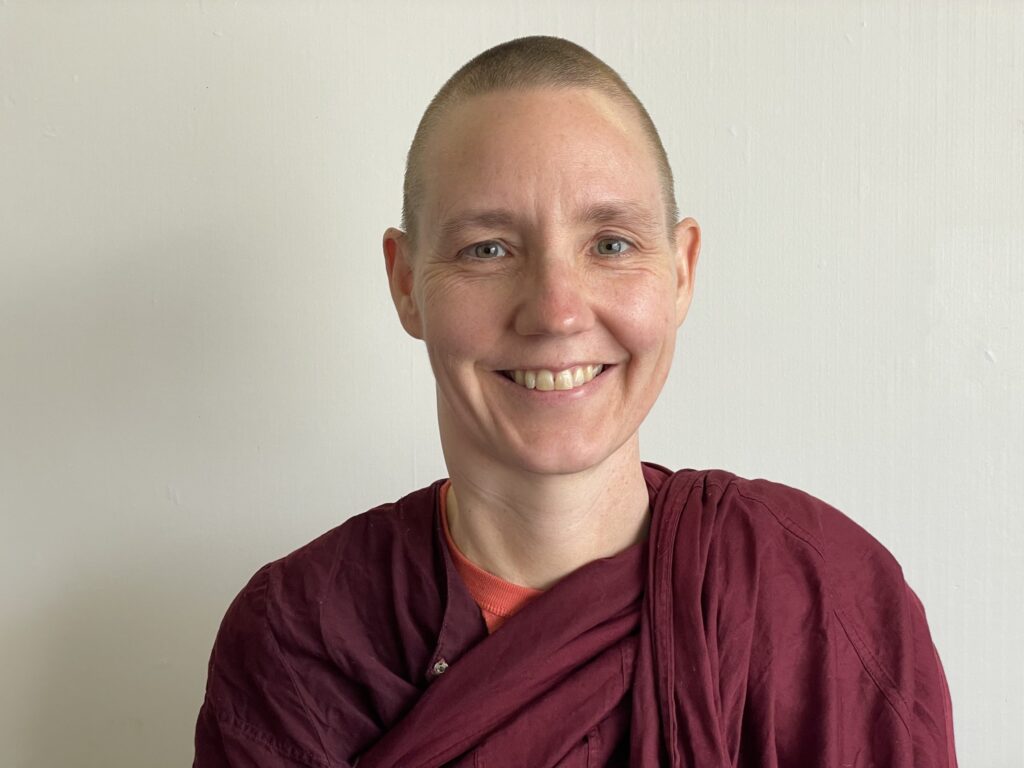 Adhimutti Bhikkhuni Adhimutti BhikkhuniDhammatiriya, Hamilton, Waikato, New Zealand Inspired by Bhaddā Kuṇḍalakesā She is a strong, independent, wild, extremely quick-witted, and intelligent woman who threw herself whole-heartedly into whatever she did.
Read reflectionClose reflection+
I have always been inspired by the story of Bhaddā Kuṇḍalakesā, partly because she is a strong, independent, wild, extremely quick-witted, and intelligent woman who threw herself whole-heartedly into whatever she did. I find it moving, too, that her ordination preserves one of the earliest and simplest methods by which the Buddha ordained bhikkhunis. He simply said to her, “Ehi, Bhaddā” (“Come, Bhaddā”). For me, Bhaddā shows that in the early texts there was a diversity of role models for Buddhist women and bhikkhunis. She is not the gentle, quietly patient archetype we sometimes default to when we imagine a nun. She is fierce and independent. And it was her intense searching, intelligence, and energy that provided the foundations for her awakening.
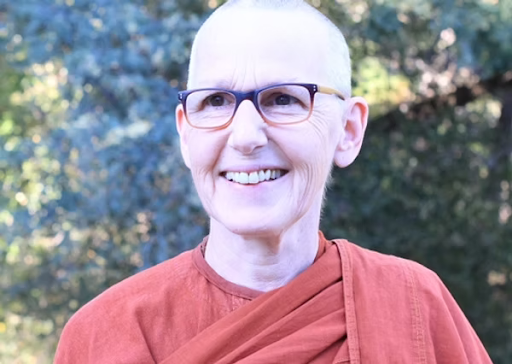 Ayya Ahimsa Ayya AhimsaCanmore Theravada Buddhist Community, Canmore, Alberta, Canada Inspired by Sama Her perseverance that is based on seeing the suffering in 'many things' deeply speaks to me.
Read reflectionClose reflection+
Sama was a friend of Queen Samavati, whose servant Khujjuttarā remembered and spoke the Itivuttaka. This Sama went forth after the tragic death of Queen Samavati. Sama did not experience much peace or ability to direct her mind for years and years, yet she continued on the Path. Finally, after 25 years and hearing a teaching directly from the Buddha, she attained awakening. She explains that this came about “because of delight in diligence prompted by the many things that are nothing but suffering.” This flavor of perseverance that is based on seeing the suffering in “many things” deeply speaks to me.
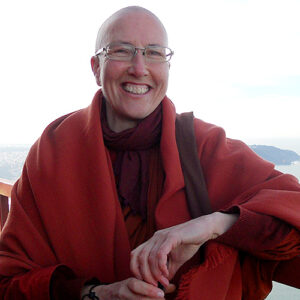 Ayya Anandabodhi Ayya AnandabodhiParayana Vihara, Port Townsend, Washington, USA Inspired by Paṭacārā She lost everything in the world, then she found the Dhamma and understood it deeply.
Read reflectionClose reflection+
Paṭacārā experienced unbearable loss and heartbreak. As a young woman, she followed her heart and not the rules of society. While she married the man she loved, they struggled as a family because of poverty and his fear of retribution from her family. In one night and day, she lost her new baby and little child, her husband, her parents, and the house she was raised in—all of it gone. She lost everything in the world, then she found the Dhamma and understood it deeply. As an awakened bhikkhuni, she taught the Dhamma and inspired and encouraged many women who had gone forth. I like her enlightenment poem in the Therigatha, too. The imagery is insightful and intuitive.
 Ayya Brahmavarā Ayya BrahmavarāEmpty Cloud, New Jersey, USA Inspired by Kisāgotamī I took up the invitation of Kisāgotamī to contemplate how much we all have to lose.
Read reflectionClose reflection+
When I first came across the verses of the arahant Bhikkhuni Kisāgotamī [Therigatha 10.1], I was bowled over by the extent of her losses. The story she tells is that of a young mother losing her husband and moments later witnessing the drowning of her infant, just as her baby is snatched away by a bird of prey. Later the same day she discovers that her parents and only sibling have also perished in a house fire. Her six closest family members gone in the space of a day. This story seemed so improbably awful that my initial reaction was to laugh in disbelief. And then, after the hysteria vented, I took up the invitation of Kisāgotamī to contemplate how much we all have to lose. This is the common ground. Every being wants to live and suffers intensely when life is lost. Those who are dear to us are ultimately also a source of sorrow, lamentation, pain, grief, and despair. And how often around us do people lose family and home? Everyone and everything all at once? As bombs drop, wars rage, floods and fires devastate—this is an event that is not so unusual after all. I am grateful for Kisāgotamī’s wake up call and how she turned the heart’s devastation to appreciation for spiritual teachings and insight, leading her to declare, “I’ve plucked out the dart, laid down the burden, and done what needed to be done.”
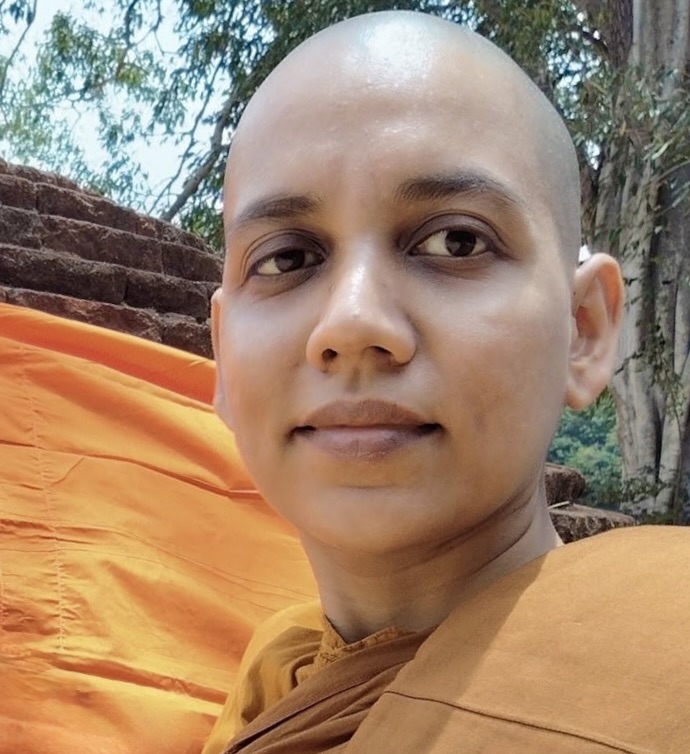 Ayya Gotami Ayya GotamiSangharama Monastery, Eluru, Andrapradesh, India Inspired by Mahapajapati Gotami, Sanghamitra, Yashodhara Their lives remind me to walk the path with courage, humility, gratitude, and dedication.
Read reflectionClose reflection+
Ven. Mahapajapati Gotami’s determination, humility, and attainment inspire me to remain steadfast in my practice. At my ordination, I received the auspicious name Gotami. Whenever I open the Patimokkha and read the name Gotami, it feels almost as though the Buddha is speaking to me directly through this name, which gives me strength and courage to continue walking the path towards Arahantship. Just before my ordination, I visited Sanchi Stupa with my family and watched the light-and-sound presentation about how King Ashoka and Queen Vaidehi allowed Ven. Mahendra and Ven. Sanghamitta to bring the Dhamma to Sri Lanka. This experience helped prepare my parents and me for my own ordination. I later discovered that the full-moon day on which I renounced is commemorated in Sri Lanka as Sanghamitta Day. I also had the humbling opportunity to escort the sacred relics of Ven. Sanghamitta Theri and Ven. Anula Devi Theri. Being born and brought up near Sanchi, I felt deeply grateful to follow, in my own small way, the footsteps of Ven. Sanghamitta by going to Sri Lanka for Bhikkhuni ordination. Ven. Yasodhara Theri inspires me through the profound bond she shared with the Buddha and Mahapajapati Gotami. I admire how all these great theris supported Buddha and one another, remained humble, achieved Arahantship, and guided others. Their lives remind me to walk the path with courage, humility, gratitude, and dedication.
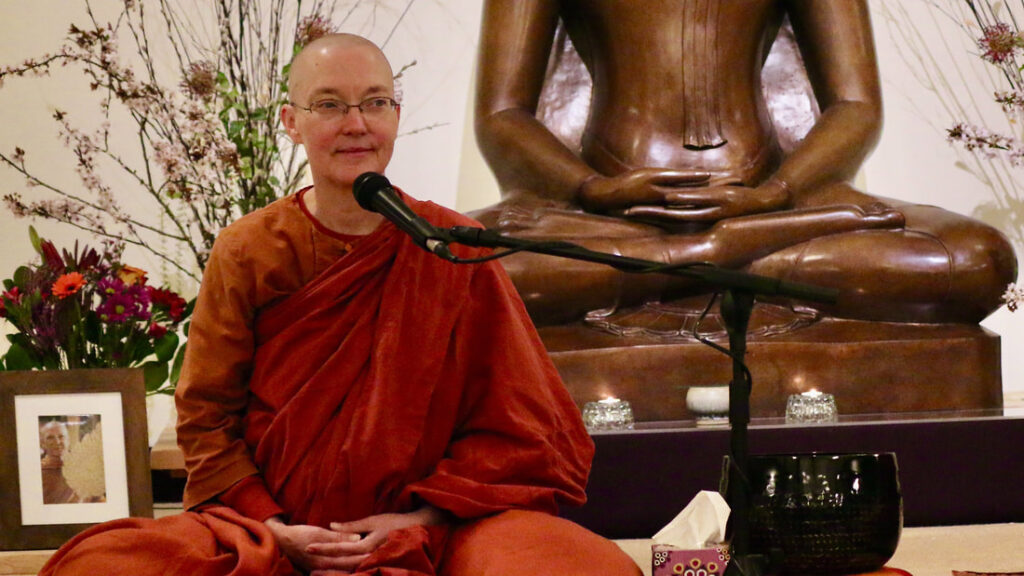 Ayya Santussika Ayya SantussikaKaruna Buddhist Vihara, Boulder Creek, California, USA Inspired by Sundarīnandā I'm inspired by Nanda's relentless investigation into this truth.... She did it, so can we.
Read reflectionClose reflection+
“Nandā, see this body as diseased, impure, and rotten. Cultivate awareness of the unattractive, with a well-collected, one-pointed mind. As this is, so is that, as that is, so is this. Only fools enjoy the vile smell of rotten winds.” These verses are the Buddha’s instructions to all of us, not only to his half-sister, Sundarīnandā. Our bodies, too, are like any body in old age or sickness or death. I’m inspired by Nanda’s relentless investigation into this truth. This is the way to break through to awakening. She did it, so can we.
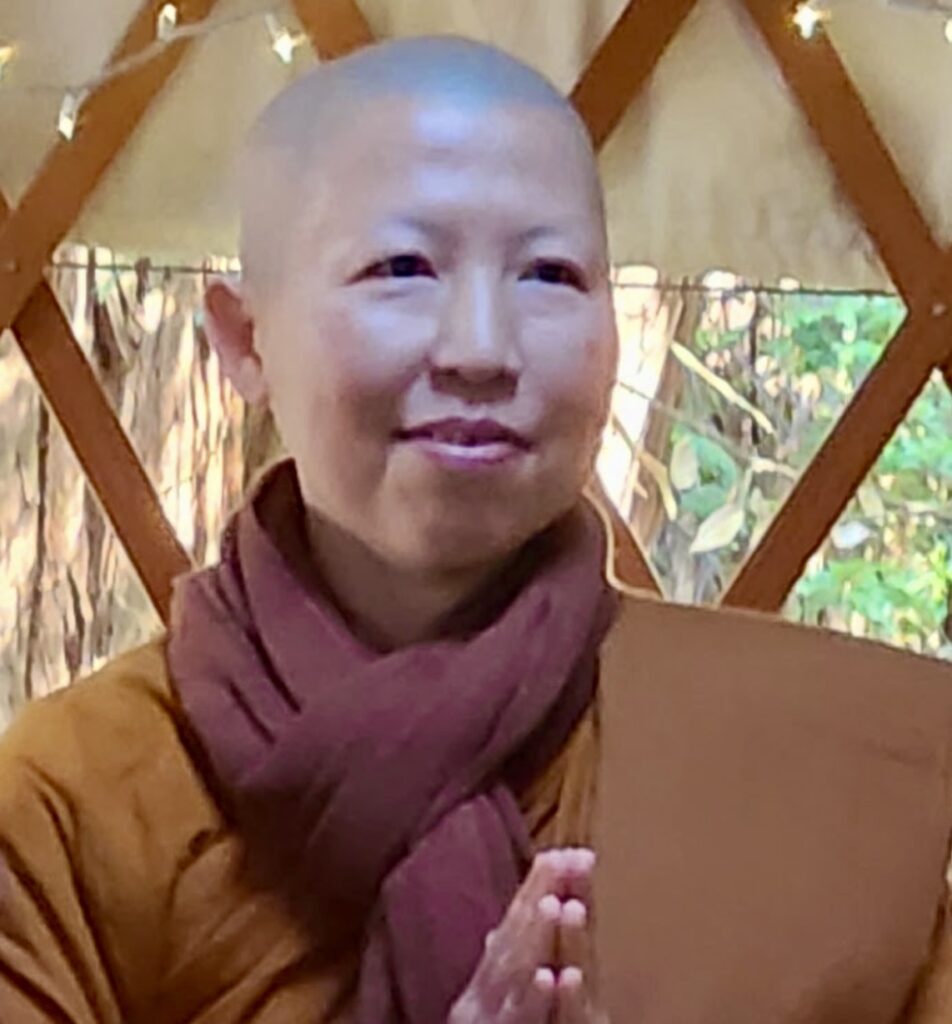 Ayyā Saṇghamittā Bhikkhunī Ayyā Saṇghamittā BhikkhunīSri Lanka Buddhist Temple, Kuala Lumpur, Selangor, Malaysia Inspired by Bhikkhunī Sukkā Her life deeply inspires my own aspiration to go forth in every single life, should such rebirths occur, and to attain Arahatship.
Read reflectionClose reflection+
I am deeply inspired by the life and spiritual attainment of Arahant Bhikkhunī Sukkā. According to traditional accounts, her liberation was supported by great merits and wholesome qualities cultivated throughout numerous past lives. Having gone forth into the holy life, she maintained pure and virtuous conduct and became deeply learned and highly accomplished in the Dhamma. Her spiritual development may be understood as a continuous process of purification and the cultivation of wholesomeness, extending across the dispensations of seven Buddhas. During the dispensation of Buddha Sakyamuni, she went forth with Bhikkhunī Dhammadinnā. She attained Arahatship, together with the four discriminations (paṭisambhidā), in a remarkably short period. She was also endowed with the Divine Ear (dibbasota). She became a distinguished teacher of the Dhamma, with an entourage of five hundred bhikkhunīs. Her teaching was so eloquent and inspiring that even the yakkhas were astonished and developed faith in her. According to tradition, they moved throughout the town, calling people to come and listen to her Dhamma teachings. Her life deeply inspires my own aspiration. Until I have fulfilled the Buddha’s teaching, I aspire to go forth in every single life, should such rebirths occur, and to attain Arahatship. I aspire to enter the holy life early, purify the mind through virtuous conduct, learning, meditation, and association with the wise, and avoid becoming further entangled or tainted by worldly life. In this way, may each life become a further step toward liberation, meanwhile guarding the Buddha’s Teaching. Sādhu! Sādhu! Sādhu!
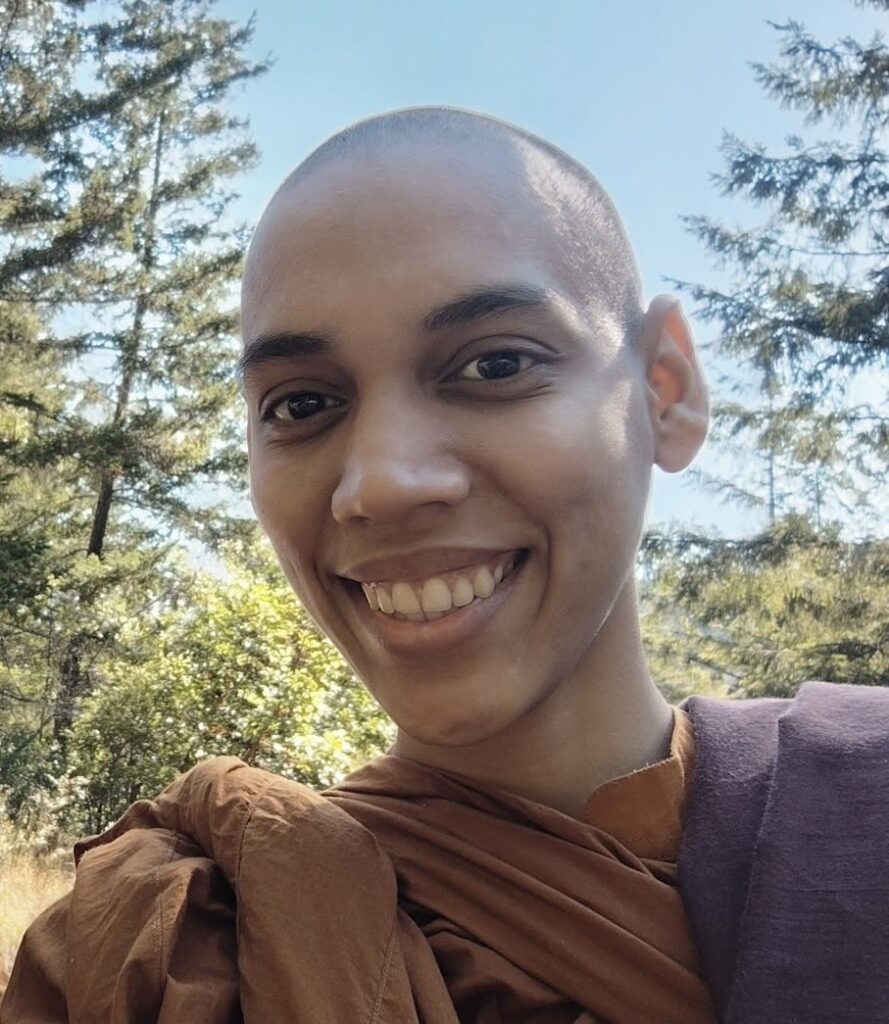 Bhikkhunī Averā Bhikkhunī AverāSangharama Monastery, Andhra Pradesh, India Inspired by All Venerable Bhikkhunis All Venerable Bhikkhunīs inspire me to walk the path, and it becomes many times easier when I look upon them.
Read reflectionClose reflection+
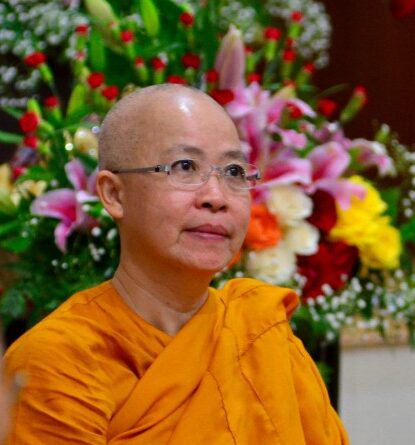 Bhikkhuni Santini Bhikkhuni SantiniVihara Kusalayani, Indonesia Inspired by All Arahant Bhikkhunis Their stories of struggle teach us that obstacles are never the end of the road, but rather a crucible designed to forge purity of intent and deepen wisdom.
Read reflectionClose reflection+
When reflecting on the profound journey of spiritual awakening, I am constantly reminded of the remarkable figures who paved the way. For me, Bhikkhunis who have attained the level of Arahant serve as a deeply profound and spiritually stirring source of inspiration in navigating daily life and dedicating oneself to the practice of the Dhamma. Their life journeys—adorned with extraordinary perseverance, unwavering steadfastness, and resilient tenacity in facing various inner emotional obstacles and external worldly challenges—provide tangible proof that the highest spiritual attainment is accessible to anyone possessing genuine sincerity of heart. Their stories of struggle teach us that obstacles are never the end of the road, but rather a crucible designed to forge purity of intent and deepen wisdom. The firmness of faith and the radiant wisdom they embody continuously act as a living reflection and invaluable guide for me personally. Through the noble example of these Arahant bhikkhunis, I am consistently encouraged to keep walking the path of the Dhamma with profound mindfulness, boundless patience, and an unyielding spirit. They remind me to remain firmly rooted in the principles of wholesome virtue, safeguard the purity of the mind, and refuse to surrender amidst the fast-paced dynamics of the modern world. May this sublime exemplary guidance continually illuminate all our steps toward inner peace and true liberation.
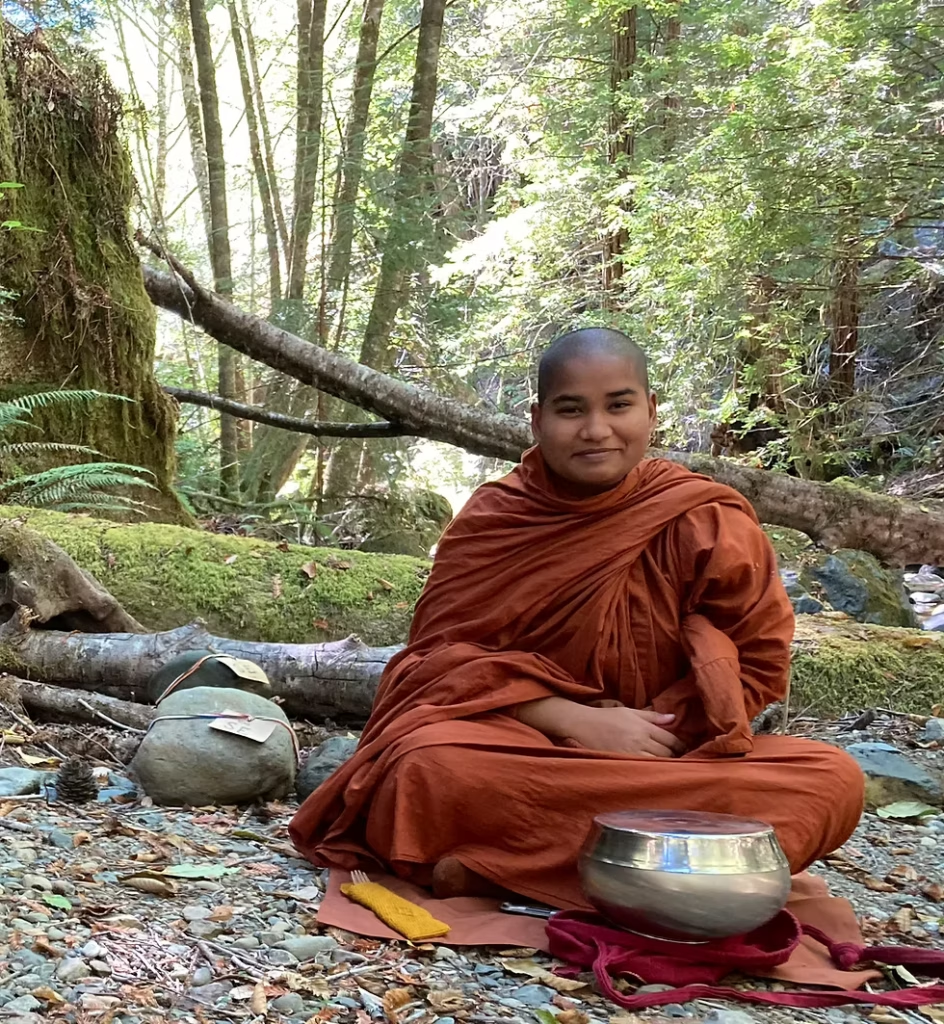 Bhikkhuni Vandana Bhikkhuni VandanaNagpur, Maharashtra, india Inspired by Subhā Jīvakambavanikā Her message feels surprisingly modern. How much of our confidence depends on our appearance? How much happiness comes from being noticed or admired?
Read reflectionClose reflection+
We live in a time when appearance can feel like an identity. Social media constantly shows us how we are “supposed” to look, and it is easy to measure our worth through photographs, compliments, likes, and attention. This is why I find the story of Bhikkhunī Subhā from the Therīgāthā so meaningful for young people today. The Therīgāthā preserves the voices of early Buddhist bhikkhunis who spoke openly about suffering, courage, wisdom, and freedom. Subhā Jīvakambavanikā was one of them. While walking through Jīvaka’s mango grove, she was approached by a man attracted to her beauty. He tried to persuade her to leave the monastic path, but Bhikkhuni Subhā firmly challenged his attraction and reminded him of the impermanent nature of the body. What makes Bhikkhuni Subhā powerful is not simply that she rejected him. It is the wisdom behind her response. She understood that youth, beauty, and the body are constantly changing. Therefore, she refused to build her identity around something that could never last. Her message feels surprisingly modern. How much of our confidence depends on our appearance? How much happiness comes from being noticed or admired? Sometimes we spend so much energy trying to look beautiful for the world that we forget to become someone we truly respect. Bhikkhuni Subhā offers us another definition of beauty: the beauty of a woman who knows her direction and does not need someone else’s approval to follow it. Perhaps her most important question for our generation is: “When the world stops judging your appearance, do you know your own worth?”
 Bhikkhuni W. Suvimalee Bhikkhuni W. SuvimaleeGunathilaka Bhikkhuni Arama, Pamunuwa, Handessa, Sri Lanka Inspired by Mahapajapati Gotami She seems to be a person of great wisdom and nobility of spirit.
Read reflectionClose reflection+
I see many inspiring qualities in Mahaprajapati Gotami as she appears in the Pali Buddhist scriptures. Absent are the selfish “I,” “me,” and “my” concepts which warp and narrow one’s perceptions of things as they are. She seems to be a person of great wisdom and nobility of spirit. Her actions came from a knowledge of the world around her and were not confined to those of the lady courtiers of the palace of Kapilavastu. She has great dignity befitting her royal status along with a humility in her acceptance of seniority as the criterion for the solution of problems pertaining to administration in the Bhikkhu and Bhikkhuni orders. In short, all her actions seem to originate from a high purpose.
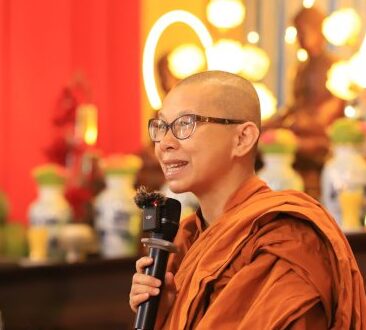 Dhammananda Therī Dhammananda TherīVinh Nghiêm Books, Long Hưng Monastery, Hanoi, Vietnam Inspired by Bhaddā Kuṇḍalakesā She is daring, brave, intelligent, quick-witted, and, to me, an amazing woman.
Read reflectionClose reflection+
Bhaddā Kuṇḍalakesā is one of the most inspiring nuns to me. She is daring, brave, intelligent, quick-witted, and, to me, an amazing woman. Her life provides a lesson for us all to learn from. She made many mistakes, endured a lot of trials, then met the Buddha himself and gained enlightenment after hearing just one verse. Her simple ordination—“Ehi, Bhikkhuni” (Come, Bhikkhuni)—was a very rare, blessed form of ordination in ancient times. Her verses of enlightenment [from the Therigatha] say: “I’ve wandered among the Aṅgans and Magadhans, the Vajjis, Kāsis, and Kosalans. I have eaten the almsfood of the nations, free of debt for fifty years.” This demonstrates that she did not stop after she encountered the Buddha and became enlightened. She continued to travel with the inspiring spirit of a wanderer!
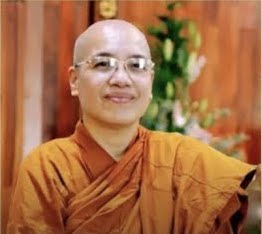 Lieu Phap Viditadhammā Mahātherī Lieu Phap Viditadhammā MahātherīSuññatā Bhikkhunī Ārāma, Ho Chi Minh City, Vietnam Inspired by Dhammadinnā Therī She represents an enduring ideal: one who practices the Dhamma, realizes the Dhamma, and then teaches the Dhamma.
Read reflectionClose reflection+
Among the great arahant bhikkhunīs, Dhammadinnā Therī particularly inspires me because the Buddha declared her foremost among bhikkhunīs who teach the Dhamma. As much of my own monastic life is devoted to Buddhist education and Dhamma teaching, her example speaks directly to my own path. In the Cūḷavedalla Sutta (MN 44), Dhammadinnā answers Visākha’s profound questions with such clarity and wisdom that the Buddha later says he would have answered in the same way. To me, she represents an enduring ideal: one who practices the Dhamma, realizes the Dhamma, and then teaches the Dhamma. Her story also reminds me that the Dhamma transforms not only our understanding but our relationships. According to the commentarial tradition, Visākha had once been her husband. They had met as wife and husband; in MN 44, they meet as teacher and questioner. Perhaps our task is not to change those closest to us but to allow the Dhamma to transform us so deeply that new ways of relating become possible. Today, when information is abundant but wisdom and ethical responsibility remain urgently needed, I believe Buddhist education must do more than transmit knowledge. It should help cultivate human beings who are more mindful, ethical, compassionate, and wise. The Buddha taught that “the gift of Dhamma surpasses all gifts.” Dhammadinnā reminds me that before I can offer that gift to others, I must first allow the Dhamma to transform my own life.
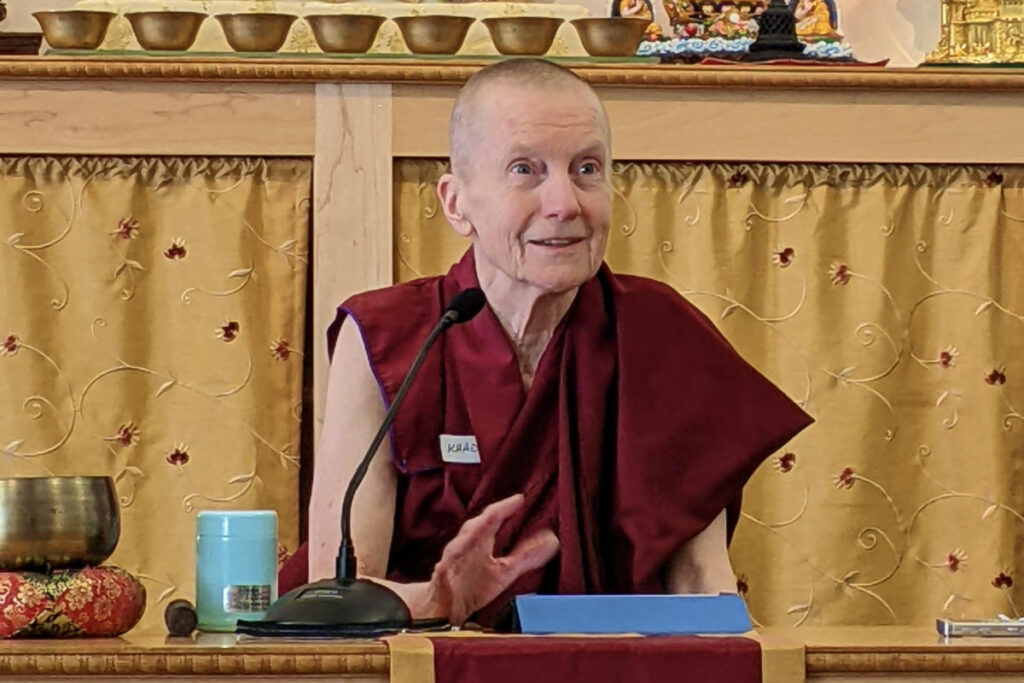 Sangye Khadro Sangye KhadroSravasti Abbey, Newport, Washington, USA Inspired by Patacara Her story shows that even the most painful experiences in life need not be the end of the world, but can be transcended, and transformed into spiritual insight.
Read reflectionClose reflection+
I am inspired by the story of Patacara. Before meeting the Buddha, she experienced the loss of everyone and everything in her life—children, husband, parents, brother, and the family home—in very tragic circumstances, and all within the span of a few days. Understandably, she then lost her mind and wandered around naked—a mad woman. In today’s world, she would be helped by doctors, psychotherapists, psychiatric medications, grief counsellors, and so on, but none of those existed at that time. Fortunately, she met the Buddha, who spoke a few simple words: “Sister, recover your presence of mind.” With that, her mind became clear again. The Buddha then gave her teachings on the nature of samsara and the path to liberation. She asked to be ordained and became his disciple. Later she attained enlightenment—free of all duhkha and its causes—and went on to become a great teacher, leading numerous other nuns to enlightenment and being an inspiring guide to laypeople. This story shows that even the most painful experiences in life need not be the end of the world, but can be transcended, and transformed into spiritual insight. Much of the pain is due to not accepting the impermanent nature of things and to clinging-attachment, wanting things to be just as they are, forever. That just isn’t possible, as the Buddha points out again and again. Accepting the reality of impermanence and selflessness brings such peace and relief.
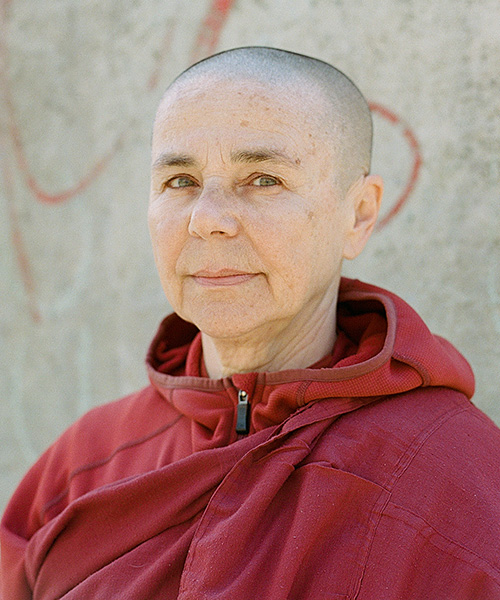 Santacitta Bhikkhuni Santacitta BhikkhuniAloka Earth Room, San Rafael, California, USA Inspired by Mahapajapati Gotami Besides her courage, determination and spiritual powers, I am also deeply impressed by her leadership and organizational skills.
Read reflectionClose reflection+
Mahapajapati Gotami has always been a great inspiration to me. Besides her courage, determination and spiritual powers, her leadership and organizational skills have deeply impressed me. She has obviously used all of her personal talents and familial assets—including the educational opportunities of being born into the leadership strata of her clan—in order to support women who felt called to practice the teachings of the Buddha in the same way as he did, as a monastic. Her strength in advancing the building of the Bhikkhuni Sangha, as well as her own practice, is amazing to me, especially considering the societal obstacles for women in Iron Age India. Mahapajapati Gotami is a prime example of perseverance in the “midst of it all,” doing what was possible at the time and not giving up because the situation looked hopeless and extremely challenging. Today’s Bhikkhuni Sangha stands on this foundation, built by Mahapajapati Gotami and her contemporaries, over 2,500 years ago. And there is indeed still a lot of work left to be done, in particular in the Theravada and Vajrayana schools. The intersecting issues of patriarchy and impending global climate collapse make the full acceptance of monastic women into the Sangha more essential and vitalizing than ever before. We must do what we can to outgrow immature attitudes of taking natural support systems—including women—for granted, by merely skimming the surface of the profound Dharma that planet Earth so convincingly demonstrates.
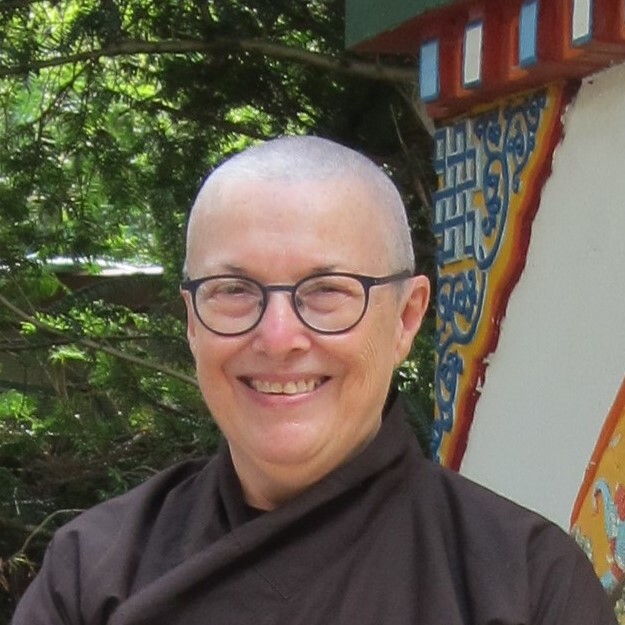 Thich Nu Tinh Quang Thich Nu Tinh QuangHamilton, Ontario, Canada Inspired by Bhaddā Kuṇḍalakesā Her extraordinary life reads like a gripping psychological drama before transitioning into an epic story of intellectual conquest and sudden spiritual awakening.
Read reflectionClose reflection+
Many years ago, the story of Bhaddā Kuṇḍalakesā first touched my heart, leaving a quiet imprint on my mind. Her extraordinary life reads like a gripping psychological drama before transitioning into an epic story of intellectual conquest and sudden spiritual awakening. As a young woman, she fell madly in love with Sattuka, a handsome but remorseless criminal whom she saw being led to execution. Her wealthy father bribed the city guards to secure Sattuka’s freedom, and the two were married. Coveting her immense collection of gold and jewels, he soon tricked her into walking up to a high mountain precipice under the guise of making an offering to a mountain deity. Once at the edge of the cliff, he cold-bloodedly told her his true intention: he was going to rob and murder her. Bhaddā did not panic. Masking her terror with sharp wit, she requested one final embrace, caught him off guard, and pushed him off the cliff to his death. Shamed by the killing, disillusioned by love, and unwilling to return to her family, she chose radical renunciation. She entered an order of Jain ascetics. As part of her intense ordination penance, her hair was painfully plucked out at the roots. When it eventually grew back, it did so in tight, unruly curls, earning her the permanent monastic moniker Kuṇḍalakesā (“Curly-Hair”). Kuṇḍalakesā mastered the Jain doctrines but found they did not completely extinguish her inner turmoil. She left the order to become a solitary wandering debater, travelling across ancient India for decades. For years, no one could best her in debate. Her streak ended when she arrived in Sāvatthī and met Venerable Śāriputra, the Buddha’s First Chief Disciple. Kuṇḍalakesā volleyed a torrent of complex theological and philosophical questions at Śāriputra. He answered every single one with effortless precision. Śāriputra took his turn and asked just one deceptive, profound question: “What is the One?” (Ekaṃ nāma kiṃ?) Recognising his vast superior wisdom, Kuṇḍalakesā immediately conceded defeat and asked to become Śāriputra’s student. He instead directed her to go directly to the Buddha. Seeing that her razor-sharp mind was completely primed for liberation, the Buddha spoke a single, famous four-line stanza (Dhammapada Verse 101): “Though one should recite a hundred verses composed of senseless words, better is a single word of the Dhamma, hearing which one attains peace.” Upon hearing these words, she attained full arahantship right then and there, skipping the gradual stages of training. Because her lightning-fast intellect allowed her to move from a state of seeking to absolute liberation in a single moment, the Buddha formally declared her foremost among all bhikkhunīs in quick intuition and swift attainment of deep knowledge.
Maharagama Uppalawanna TheriSri Lanka Inspired by Dhammadinna Theri Dhammadinna Theri provided a good example to those who considered women to be feeble and lacking the knowledge or intellect to learn and understand deep teachings like the Buddha's.
Read reflectionClose reflection+I would like to mention Arahant Dhammadinna Theri as the Theri who most impressed me. She proved that females, too, can easily realize the Dhamma and attain arahantship. Her husband, Vishaka, who doubted her, was given a sharp reply by Theri Dhammadinna. Even the Buddha was highly impressed by her reaction and appreciated her answers to her husband ‘s inquiries. This led the Buddha to proclaim her the Foremost Bhikkhuni in teaching the Dhamma. Hers was a brave challenge to the patriarchal society during the Buddha’s period. She provided a good example to those who considered women to be feeble and lacking the knowledge or intellect to learn and understand deep teachings like the Buddha’s. Therefore, I appreciate her as one of the most impressive figures among all the arahant theris of the Buddha’s sangha.
To learn more about these and other inspiring arahant bhikkhuni disciples of the Buddha, check out some of these links:
|

16th Annual International Bhikkhuni Day
16th Annual International Bhikkhuni Day
September 26, 2026, Full Moon
Celebrating the 2610th Anniversary of the Founding of the Bhikkhuni Sangha
Theme: INSPIRING Bhikkhuni Arahants
The full moon of September is recalled as the ordination day of Mahāpajāpatī Gotamī Therī & the Courageous 500 Founding Mothers of the Bhikkhuni Sangha, the first Buddhist bhikkhunis. The 1st Annual International Bhikkhunī Day (IBD) took place on September 17, 2011. Each year since then, we have paid respects to the Bhikkhuni Sangha and acknowledged its essential role in preserving the Dhamma.
We invite you to join this year’s International Bhikkhuni Day celebration! To organize an event in your community, click here for some tools you can use to create an informative and inspiring celebration. (You can also click here to visit our archive of all past IBDs.)
For this year’s International Bhikkhuni Day, we’re highlighting those ancient arahant bhikkhunis whose stories have inspired today’s bhikkhunis.
Alliance for Bhikkhunis asked contemporary bhikkhunis,
“Which arahant bhikkhuni has inspired you in your practice?”
Dhammadharini Monastery, Northern California, USA
Inspired by Bhaddā Kuṇḍalakesī
Read reflectionClose reflection+
Bhaddā Kuṇḍalakesī Therī was of great inspiration and encouragement to me as a young bhikkhunī because she was such a badass. We need heroes we can identify with. As an young wandering seeker with a fiercely inquiring mind, she was my hero. Even with enormous latent pāramīs, as a very young woman, Bhaddā got into all kinds of trouble, intoxicated by love and sex, leading to violence and great loss. She went forth with the nearest sāmana group known to accept women, the Jains, her hair torn out by the roots for her initiation in response to her asking for their highest course of renunciate asceticism. Doing all she was told without finding relief, when they couldn’t answer her further Dhamma questions, she left there, wandering in a single robe, wearing the dust. Everywhere she wandered, she set forth a challenge to debate. But when she met the Buddha at Vulture Peak, that all stopped. Hearing words of Dhamma in his presence, she immediately penetrated the meaning and awoke. She was seen, acknowledged, and welcomed by the Buddha: “‘Ehi, Bhadde’ti” (“Come, Bhaddā). That was it. There was no turning back. She was free. And for the rest of her life she wandered free from debt—a bhikkhunī arahantī—one of the foremost disciples of the Buddha. While these days, I don’t have a favorite arahant bhikkhunī anymore—I appreciate them all!—I offer this in deep gratitude and compassion to my younger self, blessing those who helped her find the courage.
Dhammatiriya, Hamilton, Waikato, New Zealand
Inspired by Bhaddā Kuṇḍalakesā
Read reflectionClose reflection+
I have always been inspired by the story of Bhaddā Kuṇḍalakesā, partly because she is a strong, independent, wild, extremely quick-witted, and intelligent woman who threw herself whole-heartedly into whatever she did. I find it moving, too, that her ordination preserves one of the earliest and simplest methods by which the Buddha ordained bhikkhunis. He simply said to her, “Ehi, Bhaddā” (“Come, Bhaddā”). For me, Bhaddā shows that in the early texts there was a diversity of role models for Buddhist women and bhikkhunis. She is not the gentle, quietly patient archetype we sometimes default to when we imagine a nun. She is fierce and independent. And it was her intense searching, intelligence, and energy that provided the foundations for her awakening.
Canmore Theravada Buddhist Community, Canmore, Alberta, Canada
Inspired by Sama
Read reflectionClose reflection+
Sama was a friend of Queen Samavati, whose servant Khujjuttarā remembered and spoke the Itivuttaka. This Sama went forth after the tragic death of Queen Samavati. Sama did not experience much peace or ability to direct her mind for years and years, yet she continued on the Path. Finally, after 25 years and hearing a teaching directly from the Buddha, she attained awakening. She explains that this came about “because of delight in diligence prompted by the many things that are nothing but suffering.” This flavor of perseverance that is based on seeing the suffering in “many things” deeply speaks to me.
Parayana Vihara, Port Townsend, Washington, USA
Inspired by Paṭacārā
Read reflectionClose reflection+
Paṭacārā experienced unbearable loss and heartbreak. As a young woman, she followed her heart and not the rules of society. While she married the man she loved, they struggled as a family because of poverty and his fear of retribution from her family. In one night and day, she lost her new baby and little child, her husband, her parents, and the house she was raised in—all of it gone. She lost everything in the world, then she found the Dhamma and understood it deeply. As an awakened bhikkhuni, she taught the Dhamma and inspired and encouraged many women who had gone forth. I like her enlightenment poem in the Therigatha, too. The imagery is insightful and intuitive.
Empty Cloud, New Jersey, USA
Inspired by Kisāgotamī
Read reflectionClose reflection+
When I first came across the verses of the arahant Bhikkhuni Kisāgotamī [Therigatha 10.1], I was bowled over by the extent of her losses. The story she tells is that of a young mother losing her husband and moments later witnessing the drowning of her infant, just as her baby is snatched away by a bird of prey. Later the same day she discovers that her parents and only sibling have also perished in a house fire. Her six closest family members gone in the space of a day. This story seemed so improbably awful that my initial reaction was to laugh in disbelief. And then, after the hysteria vented, I took up the invitation of Kisāgotamī to contemplate how much we all have to lose. This is the common ground. Every being wants to live and suffers intensely when life is lost. Those who are dear to us are ultimately also a source of sorrow, lamentation, pain, grief, and despair. And how often around us do people lose family and home? Everyone and everything all at once? As bombs drop, wars rage, floods and fires devastate—this is an event that is not so unusual after all. I am grateful for Kisāgotamī’s wake up call and how she turned the heart’s devastation to appreciation for spiritual teachings and insight, leading her to declare, “I’ve plucked out the dart, laid down the burden, and done what needed to be done.”
Sangharama Monastery, Eluru, Andrapradesh, India
Inspired by Mahapajapati Gotami, Sanghamitra, Yashodhara
Read reflectionClose reflection+
Ven. Mahapajapati Gotami’s determination, humility, and attainment inspire me to remain steadfast in my practice. At my ordination, I received the auspicious name Gotami. Whenever I open the Patimokkha and read the name Gotami, it feels almost as though the Buddha is speaking to me directly through this name, which gives me strength and courage to continue walking the path towards Arahantship. Just before my ordination, I visited Sanchi Stupa with my family and watched the light-and-sound presentation about how King Ashoka and Queen Vaidehi allowed Ven. Mahendra and Ven. Sanghamitta to bring the Dhamma to Sri Lanka. This experience helped prepare my parents and me for my own ordination. I later discovered that the full-moon day on which I renounced is commemorated in Sri Lanka as Sanghamitta Day. I also had the humbling opportunity to escort the sacred relics of Ven. Sanghamitta Theri and Ven. Anula Devi Theri. Being born and brought up near Sanchi, I felt deeply grateful to follow, in my own small way, the footsteps of Ven. Sanghamitta by going to Sri Lanka for Bhikkhuni ordination. Ven. Yasodhara Theri inspires me through the profound bond she shared with the Buddha and Mahapajapati Gotami. I admire how all these great theris supported Buddha and one another, remained humble, achieved Arahantship, and guided others. Their lives remind me to walk the path with courage, humility, gratitude, and dedication.
Karuna Buddhist Vihara, Boulder Creek, California, USA
Inspired by Sundarīnandā
Read reflectionClose reflection+
“Nandā, see this body as diseased, impure, and rotten. Cultivate awareness of the unattractive, with a well-collected, one-pointed mind. As this is, so is that, as that is, so is this. Only fools enjoy the vile smell of rotten winds.” These verses are the Buddha’s instructions to all of us, not only to his half-sister, Sundarīnandā. Our bodies, too, are like any body in old age or sickness or death. I’m inspired by Nanda’s relentless investigation into this truth. This is the way to break through to awakening. She did it, so can we.
Sri Lanka Buddhist Temple, Kuala Lumpur, Selangor, Malaysia
Inspired by Bhikkhunī Sukkā
Read reflectionClose reflection+
I am deeply inspired by the life and spiritual attainment of Arahant Bhikkhunī Sukkā. According to traditional accounts, her liberation was supported by great merits and wholesome qualities cultivated throughout numerous past lives. Having gone forth into the holy life, she maintained pure and virtuous conduct and became deeply learned and highly accomplished in the Dhamma. Her spiritual development may be understood as a continuous process of purification and the cultivation of wholesomeness, extending across the dispensations of seven Buddhas. During the dispensation of Buddha Sakyamuni, she went forth with Bhikkhunī Dhammadinnā. She attained Arahatship, together with the four discriminations (paṭisambhidā), in a remarkably short period. She was also endowed with the Divine Ear (dibbasota). She became a distinguished teacher of the Dhamma, with an entourage of five hundred bhikkhunīs. Her teaching was so eloquent and inspiring that even the yakkhas were astonished and developed faith in her. According to tradition, they moved throughout the town, calling people to come and listen to her Dhamma teachings. Her life deeply inspires my own aspiration. Until I have fulfilled the Buddha’s teaching, I aspire to go forth in every single life, should such rebirths occur, and to attain Arahatship. I aspire to enter the holy life early, purify the mind through virtuous conduct, learning, meditation, and association with the wise, and avoid becoming further entangled or tainted by worldly life. In this way, may each life become a further step toward liberation, meanwhile guarding the Buddha’s Teaching. Sādhu! Sādhu! Sādhu!
Sangharama Monastery, Andhra Pradesh, India
Inspired by All Venerable Bhikkhunis
Read reflectionClose reflection+
Vihara Kusalayani, Indonesia
Inspired by All Arahant Bhikkhunis
Read reflectionClose reflection+
When reflecting on the profound journey of spiritual awakening, I am constantly reminded of the remarkable figures who paved the way. For me, Bhikkhunis who have attained the level of Arahant serve as a deeply profound and spiritually stirring source of inspiration in navigating daily life and dedicating oneself to the practice of the Dhamma. Their life journeys—adorned with extraordinary perseverance, unwavering steadfastness, and resilient tenacity in facing various inner emotional obstacles and external worldly challenges—provide tangible proof that the highest spiritual attainment is accessible to anyone possessing genuine sincerity of heart. Their stories of struggle teach us that obstacles are never the end of the road, but rather a crucible designed to forge purity of intent and deepen wisdom. The firmness of faith and the radiant wisdom they embody continuously act as a living reflection and invaluable guide for me personally. Through the noble example of these Arahant bhikkhunis, I am consistently encouraged to keep walking the path of the Dhamma with profound mindfulness, boundless patience, and an unyielding spirit. They remind me to remain firmly rooted in the principles of wholesome virtue, safeguard the purity of the mind, and refuse to surrender amidst the fast-paced dynamics of the modern world. May this sublime exemplary guidance continually illuminate all our steps toward inner peace and true liberation.
Nagpur, Maharashtra, india
Inspired by Subhā Jīvakambavanikā
Read reflectionClose reflection+
We live in a time when appearance can feel like an identity. Social media constantly shows us how we are “supposed” to look, and it is easy to measure our worth through photographs, compliments, likes, and attention. This is why I find the story of Bhikkhunī Subhā from the Therīgāthā so meaningful for young people today. The Therīgāthā preserves the voices of early Buddhist bhikkhunis who spoke openly about suffering, courage, wisdom, and freedom. Subhā Jīvakambavanikā was one of them. While walking through Jīvaka’s mango grove, she was approached by a man attracted to her beauty. He tried to persuade her to leave the monastic path, but Bhikkhuni Subhā firmly challenged his attraction and reminded him of the impermanent nature of the body. What makes Bhikkhuni Subhā powerful is not simply that she rejected him. It is the wisdom behind her response. She understood that youth, beauty, and the body are constantly changing. Therefore, she refused to build her identity around something that could never last. Her message feels surprisingly modern. How much of our confidence depends on our appearance? How much happiness comes from being noticed or admired? Sometimes we spend so much energy trying to look beautiful for the world that we forget to become someone we truly respect. Bhikkhuni Subhā offers us another definition of beauty: the beauty of a woman who knows her direction and does not need someone else’s approval to follow it. Perhaps her most important question for our generation is: “When the world stops judging your appearance, do you know your own worth?”
Gunathilaka Bhikkhuni Arama, Pamunuwa, Handessa, Sri Lanka
Inspired by Mahapajapati Gotami
Read reflectionClose reflection+
I see many inspiring qualities in Mahaprajapati Gotami as she appears in the Pali Buddhist scriptures. Absent are the selfish “I,” “me,” and “my” concepts which warp and narrow one’s perceptions of things as they are. She seems to be a person of great wisdom and nobility of spirit. Her actions came from a knowledge of the world around her and were not confined to those of the lady courtiers of the palace of Kapilavastu. She has great dignity befitting her royal status along with a humility in her acceptance of seniority as the criterion for the solution of problems pertaining to administration in the Bhikkhu and Bhikkhuni orders. In short, all her actions seem to originate from a high purpose.
Vinh Nghiêm Books, Long Hưng Monastery, Hanoi, Vietnam
Inspired by Bhaddā Kuṇḍalakesā
Read reflectionClose reflection+
Bhaddā Kuṇḍalakesā is one of the most inspiring nuns to me. She is daring, brave, intelligent, quick-witted, and, to me, an amazing woman. Her life provides a lesson for us all to learn from. She made many mistakes, endured a lot of trials, then met the Buddha himself and gained enlightenment after hearing just one verse. Her simple ordination—“Ehi, Bhikkhuni” (Come, Bhikkhuni)—was a very rare, blessed form of ordination in ancient times. Her verses of enlightenment [from the Therigatha] say: “I’ve wandered among the Aṅgans and Magadhans, the Vajjis, Kāsis, and Kosalans. I have eaten the almsfood of the nations, free of debt for fifty years.” This demonstrates that she did not stop after she encountered the Buddha and became enlightened. She continued to travel with the inspiring spirit of a wanderer!
Suññatā Bhikkhunī Ārāma, Ho Chi Minh City, Vietnam
Inspired by Dhammadinnā Therī
Read reflectionClose reflection+
Among the great arahant bhikkhunīs, Dhammadinnā Therī particularly inspires me because the Buddha declared her foremost among bhikkhunīs who teach the Dhamma. As much of my own monastic life is devoted to Buddhist education and Dhamma teaching, her example speaks directly to my own path. In the Cūḷavedalla Sutta (MN 44), Dhammadinnā answers Visākha’s profound questions with such clarity and wisdom that the Buddha later says he would have answered in the same way. To me, she represents an enduring ideal: one who practices the Dhamma, realizes the Dhamma, and then teaches the Dhamma. Her story also reminds me that the Dhamma transforms not only our understanding but our relationships. According to the commentarial tradition, Visākha had once been her husband. They had met as wife and husband; in MN 44, they meet as teacher and questioner. Perhaps our task is not to change those closest to us but to allow the Dhamma to transform us so deeply that new ways of relating become possible. Today, when information is abundant but wisdom and ethical responsibility remain urgently needed, I believe Buddhist education must do more than transmit knowledge. It should help cultivate human beings who are more mindful, ethical, compassionate, and wise. The Buddha taught that “the gift of Dhamma surpasses all gifts.” Dhammadinnā reminds me that before I can offer that gift to others, I must first allow the Dhamma to transform my own life.
Sravasti Abbey, Newport, Washington, USA
Inspired by Patacara
Read reflectionClose reflection+
I am inspired by the story of Patacara. Before meeting the Buddha, she experienced the loss of everyone and everything in her life—children, husband, parents, brother, and the family home—in very tragic circumstances, and all within the span of a few days. Understandably, she then lost her mind and wandered around naked—a mad woman. In today’s world, she would be helped by doctors, psychotherapists, psychiatric medications, grief counsellors, and so on, but none of those existed at that time. Fortunately, she met the Buddha, who spoke a few simple words: “Sister, recover your presence of mind.” With that, her mind became clear again. The Buddha then gave her teachings on the nature of samsara and the path to liberation. She asked to be ordained and became his disciple. Later she attained enlightenment—free of all duhkha and its causes—and went on to become a great teacher, leading numerous other nuns to enlightenment and being an inspiring guide to laypeople. This story shows that even the most painful experiences in life need not be the end of the world, but can be transcended, and transformed into spiritual insight. Much of the pain is due to not accepting the impermanent nature of things and to clinging-attachment, wanting things to be just as they are, forever. That just isn’t possible, as the Buddha points out again and again. Accepting the reality of impermanence and selflessness brings such peace and relief.
Aloka Earth Room, San Rafael, California, USA
Inspired by Mahapajapati Gotami
Read reflectionClose reflection+
Mahapajapati Gotami has always been a great inspiration to me. Besides her courage, determination and spiritual powers, her leadership and organizational skills have deeply impressed me. She has obviously used all of her personal talents and familial assets—including the educational opportunities of being born into the leadership strata of her clan—in order to support women who felt called to practice the teachings of the Buddha in the same way as he did, as a monastic. Her strength in advancing the building of the Bhikkhuni Sangha, as well as her own practice, is amazing to me, especially considering the societal obstacles for women in Iron Age India. Mahapajapati Gotami is a prime example of perseverance in the “midst of it all,” doing what was possible at the time and not giving up because the situation looked hopeless and extremely challenging. Today’s Bhikkhuni Sangha stands on this foundation, built by Mahapajapati Gotami and her contemporaries, over 2,500 years ago. And there is indeed still a lot of work left to be done, in particular in the Theravada and Vajrayana schools. The intersecting issues of patriarchy and impending global climate collapse make the full acceptance of monastic women into the Sangha more essential and vitalizing than ever before. We must do what we can to outgrow immature attitudes of taking natural support systems—including women—for granted, by merely skimming the surface of the profound Dharma that planet Earth so convincingly demonstrates.
Hamilton, Ontario, Canada
Inspired by Bhaddā Kuṇḍalakesā
Read reflectionClose reflection+
Many years ago, the story of Bhaddā Kuṇḍalakesā first touched my heart, leaving a quiet imprint on my mind. Her extraordinary life reads like a gripping psychological drama before transitioning into an epic story of intellectual conquest and sudden spiritual awakening. As a young woman, she fell madly in love with Sattuka, a handsome but remorseless criminal whom she saw being led to execution. Her wealthy father bribed the city guards to secure Sattuka’s freedom, and the two were married. Coveting her immense collection of gold and jewels, he soon tricked her into walking up to a high mountain precipice under the guise of making an offering to a mountain deity. Once at the edge of the cliff, he cold-bloodedly told her his true intention: he was going to rob and murder her. Bhaddā did not panic. Masking her terror with sharp wit, she requested one final embrace, caught him off guard, and pushed him off the cliff to his death. Shamed by the killing, disillusioned by love, and unwilling to return to her family, she chose radical renunciation. She entered an order of Jain ascetics. As part of her intense ordination penance, her hair was painfully plucked out at the roots. When it eventually grew back, it did so in tight, unruly curls, earning her the permanent monastic moniker Kuṇḍalakesā (“Curly-Hair”). Kuṇḍalakesā mastered the Jain doctrines but found they did not completely extinguish her inner turmoil. She left the order to become a solitary wandering debater, travelling across ancient India for decades. For years, no one could best her in debate. Her streak ended when she arrived in Sāvatthī and met Venerable Śāriputra, the Buddha’s First Chief Disciple. Kuṇḍalakesā volleyed a torrent of complex theological and philosophical questions at Śāriputra. He answered every single one with effortless precision. Śāriputra took his turn and asked just one deceptive, profound question: “What is the One?” (Ekaṃ nāma kiṃ?) Recognising his vast superior wisdom, Kuṇḍalakesā immediately conceded defeat and asked to become Śāriputra’s student. He instead directed her to go directly to the Buddha. Seeing that her razor-sharp mind was completely primed for liberation, the Buddha spoke a single, famous four-line stanza (Dhammapada Verse 101): “Though one should recite a hundred verses composed of senseless words, better is a single word of the Dhamma, hearing which one attains peace.” Upon hearing these words, she attained full arahantship right then and there, skipping the gradual stages of training. Because her lightning-fast intellect allowed her to move from a state of seeking to absolute liberation in a single moment, the Buddha formally declared her foremost among all bhikkhunīs in quick intuition and swift attainment of deep knowledge.
Maharagama Uppalawanna Theri
Sri Lanka
Inspired by Dhammadinna Theri
Read reflectionClose reflection+
I would like to mention Arahant Dhammadinna Theri as the Theri who most impressed me. She proved that females, too, can easily realize the Dhamma and attain arahantship. Her husband, Vishaka, who doubted her, was given a sharp reply by Theri Dhammadinna. Even the Buddha was highly impressed by her reaction and appreciated her answers to her husband ‘s inquiries. This led the Buddha to proclaim her the Foremost Bhikkhuni in teaching the Dhamma. Hers was a brave challenge to the patriarchal society during the Buddha’s period. She provided a good example to those who considered women to be feeble and lacking the knowledge or intellect to learn and understand deep teachings like the Buddha’s. Therefore, I appreciate her as one of the most impressive figures among all the arahant theris of the Buddha’s sangha.
To learn more about these and other inspiring arahant bhikkhuni disciples of the Buddha, check out some of these links: